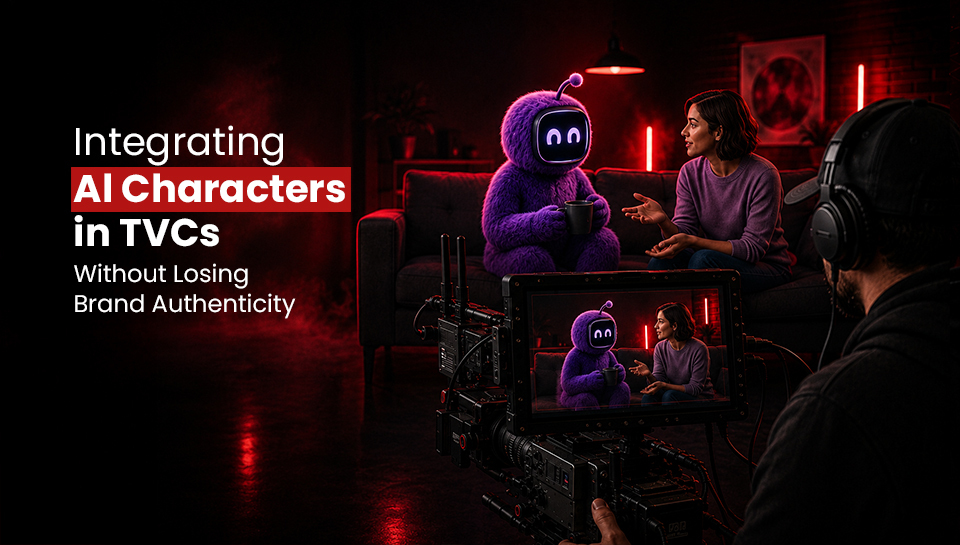
With the rise of Artificial Intelligence, the imagination, production, and delivery of commercials is rapidly reshaping. In recent years, AI characters in TVCs have moved from experimental concepts to real creative assets in commercial directing. Brands and core entities are increasingly exploring AI-generated personalities, digital humans, and synthetic actors to deliver visually compelling narratives while reducing TVC production complexity.
However, while AI in TV commercial production unlocks extraordinary creative opportunities, it also introduces a critical challenge: maintaining authenticity. Commercials rely heavily on emotional connection and brand trust. If AI characters appear artificial or disconnected from the brand’s identity, audiences may feel alienated rather than engaged.
The key lies in using AI strategically—enhancing creativity and efficiency without compromising the human essence that defines strong advertising.
The Rise of AI Characters in Commercial Advertising
AI-generated personalities are becoming a visible part of modern marketing. Today, AI characters in advertising range from realistic digital humans to stylized virtual mascots designed to represent brands across multiple platforms.
Advances in machine learning, generative video tools, and neural rendering have enabled creators to build highly convincing digital performers. Platforms like Runway ML are already being used to generate synthetic footage, while companies such as OpenAI are pushing the boundaries of generative AI that can power these creative workflows.
Digital humans in advertising are now appearing in:
- Global brand films
- Social media advertising campaigns
- Interactive retail experiences
- AI-driven brand campaigns
Luxury brands, tech companies, and telecom operators have started experimenting with synthetic actors in commercials to maintain consistent brand representation across multiple markets.
For example, a digital spokesperson can appear in dozens of localized campaigns without requiring reshoots, travel, or scheduling complexities. This makes AI-driven storytelling particularly attractive in regions with rapidly expanding advertising markets such as the UAE and Pakistan.
But the goal is not simply to replace actors. The real opportunity lies in enhancing AI brand storytelling, enabling brands to create unique characters that audiences recognize and connect with over time.
How AI Characters Are Changing TVC Production
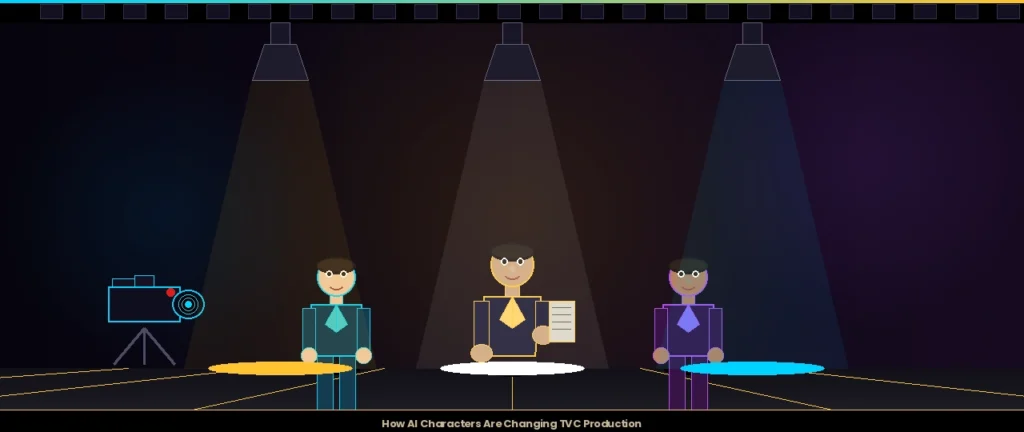
How AI Characters Are Changing TVC Production
Traditional commercial filmmaking involves multiple stages: casting, set design, filming, editing, and post-production. Integrating CGI characters can transform several parts of this pipeline.
Modern AI TVC production introduces new efficiencies in areas such as:
Virtual Casting
Brands can design digital personalities tailored precisely to their identity. This virtual production means that instead of searching for actors who fit a brand persona, entities can generate characters that visually represent the brand’s tone, audience, and values.
These synthetic actors can maintain consistency across campaigns, making them particularly useful as long-term brand ambassadors.
Faster Production Cycles
AI dramatically accelerates the AI filmmaking workflow, thanks to machine learning. Scenes involving digital characters can be produced without physical sets, reducing logistics costs.
For example, many production teams now integrate AI-generated environments, allowing directors to visualize and render scenes before physical filming begins. This hybrid production method blends real footage with AI-generated characters.
Commercial production studios involved in modern TVC production are increasingly combining traditional filmmaking with AI-assisted visual generation.
Creative Experimentation
AI tools and features, such as motion capture, also allow directors to explore creative ideas that were previously too expensive or technically difficult. Directors can:
- Create impossible camera movements
- Generate dynamic virtual environments
- Animate characters with extreme realism
This allows AI commercial filmmaking to expand storytelling possibilities far beyond conventional production methods.
However, creative power alone does not guarantee effective advertising.
The Risk of Losing Brand Authenticity
Despite its advantages, AI advertising production carries a significant risk: audiences may perceive synthetic characters as artificial or emotionally distant.
Authenticity is the foundation of effective brand storytelling. When viewers sense that a character lacks genuine expression, it can undermine customer trust.
Several challenges can emerge:
The “Uncanny Valley” Effect
Digital humans that appear almost realistic—but not quite—can make audiences uncomfortable. This psychological phenomenon, known as the uncanny valley, is one of the biggest risks of using digital humans in advertising, as it can distort the effectiveness of brand messaging.
Brand Identity Misalignment
If AI characters are designed without a clear connection to the brand voice, they may feel disconnected from the company’s message.
For instance, a heritage brand that relies on emotional storytelling might lose credibility if its AI characters feel overly robotic.
Audience Transparency
Modern audiences are increasingly aware of AI-generated media. If brands attempt to hide the use of AI rather than embrace it transparently, it may damage brand authenticity and credibility.
This is particularly important in AI advertising production, where ethical transparency is becoming part of responsible marketing.
Best Practices for Using AI Characters in Commercials
To ensure success, agencies and brands must treat AI as a storytelling tool rather than a novelty. Blending human creativity with AI storytelling in commercials can increase audience engagement and connection to the advertising campaign.
Here are practical strategies used by leading production teams.
Anchor AI Characters in Brand Identity
AI characters should reflect the brand’s values, tone, and personality.
For example, brands that focus on lifestyle storytelling often integrate digital characters and appropriate cinematic language into their narratives, ensuring the characters reflect the emotional voice of the campaign.
Combine Real Actors With AI
Hybrid productions often feel more authentic. Directors frequently blend human actors with AI-generated characters, allowing audiences to maintain a human connection while still benefiting from digital creativity.
Use AI for Enhancement, Not Replacement
The most successful AI-driven campaigns use digital tools to support, rather than replace, creative direction.
For example:
- AI can generate previsualizations for directors
- Synthetic environments can extend real-world sets
- AI characters can complement human performances
Maintain Emotional Realism
Voice acting, facial animation, and subtle expressions are essential for believable characters. AI characters should be directed and animated with the same care as live performers to ensure emotional storytelling that resonates with the audience.
In other words, AI creative direction remains fundamentally a human responsibility.
Balancing Technology and Human Creativity
Advertising has always been driven by creativity. AI should serve as a collaborator in that process—not the ultimate replacement for human creativity.
The most effective AI filmmaking workflow involves close collaboration between:
- Creative directors
- Cinematographers
- AI artists
- Editors and VFX specialists
This hybrid approach ensures storytelling maintains emotional connection while leveraging technological innovation.
For example, AI tools can help with creative strategy and generate multiple visual concepts quickly, allowing teams to experiment with storyboards and character designs before committing to final production.
But the emotional narrative—the heart of the commercial—still comes from human insight.
Brands that understand this balance tend to produce the most effective AI-driven brand campaigns.
Benefits and Limitations of AI Characters in TVCs
Key Benefits
- TVC Production Efficiency
AI significantly reduces filming logistics, travel costs, and reshoot requirements. - Creative Flexibility
Directors can visualize ideas that would be impossible or extremely expensive with traditional production methods. - Scalable Advertising Campaigns
AI characters can appear across multiple markets and languages without needing new casting. - Consistent Brand Identity
Digital characters can become long-term brand assets used across campaigns.
Limitations
- Risk of Artificiality
Poorly executed AI characters can appear unnatural. - Audience Trust Issues
If transparency is lacking, audiences may feel manipulated. - Creative Overreliance on Technology
AI should enhance storytelling rather than dominate it.
The Future of AI Characters in Advertising
The next decade will likely see even deeper integration of AI characters in TVCs and digital advertising. As AI technology continues to evolve, brands will increasingly explore:
Automated Content Creation
AI could generate customized ads featuring digital characters that interact directly with viewers, based on demographics or behavioral data. They could also generate multiple versions of commercials tailored for different audiences, languages, and platforms. This will allow for consistent messaging in customized ads.
Persistent Brand Avatars and Digital Influencers
Brands may develop AI personalization that appears across TV commercials, social media, and interactive experiences. These ‘digital influencers’ can engage with audiences on multiple platforms and can help build recognizable identities that extend far beyond a single campaign.
Real-Time Advertising
Advances in generative AI could enable commercials to be dynamically produced and adjusted in near real time.
In regions like the Gulf and South Asia, the growth of AI advertising UAE and AI filmmaking Pakistan signals that emerging markets will play a major role in adopting these technologies.
But even as synthetic media and digital humans become more sophisticated, one principle will remain constant: ‘authenticity drives engagement’.
Final Thoughts
AI is transforming commercial filmmaking in remarkable ways. From digital humans to automated production workflows, AI TVC production is expanding what brands can achieve visually and creatively.
Yet technology alone cannot create meaningful connections with audiences. Therefore, AI should be used as a WORK SMART tool that enhances human abilities and allows them to focus on their main skill – thinking!
The brands that succeed will be those that treat AI as a creative partner—leveraging its capabilities while preserving human storytelling, emotional resonance, and authenticity.
When used thoughtfully, AI characters in advertising can elevate campaigns, expand creative boundaries, and redefine how brands communicate with audiences in the years ahead.